
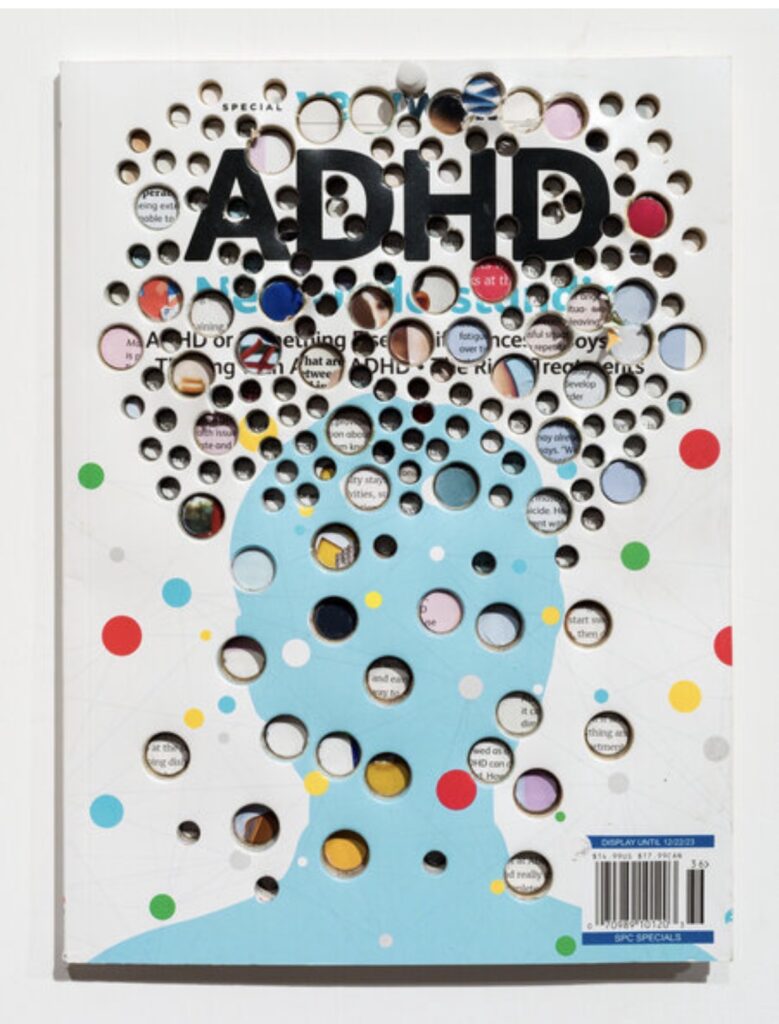
For most of my life, I thought there was something wrong with me.
I knew I was different, but I could never quite understand how.
At different points, I wondered whether I was depressed, whether I had anxiety, whether I might have borderline personality disorder, or whether there was simply something fundamentally wrong with the way I experienced the world.
I could be incredibly social and then suddenly need to disappear.
I craved novelty, excitement and stimulation—but at the same time, unexpected changes could completely overwhelm me.
I wanted structure, but struggled to maintain it.
I could be extremely productive and intensely focused on something that fascinated me, yet completely unable to start a basic task that I knew needed to be done.
I could tolerate enormous amounts of pressure—and then become overwhelmed by a noise, a crowded room, too many messages, or one seemingly insignificant change of plans.
For years, these contradictions confused me.
Then I discovered AuDHD.
And suddenly, my life started making sense.
A Gentle Note
AuDHD is an informal term used to describe the co-occurrence of autism and ADHD; it is not a separate medical diagnosis. Only qualified healthcare professionals can assess and diagnose these conditions, and similar experiences can have many possible explanations. If you recognize yourself in this article, consider speaking with a qualified clinician. A healthcare professional can help you understand your experiences and make informed decisions about treatment, medication, supplements and other forms of support.
What Is AuDHD?
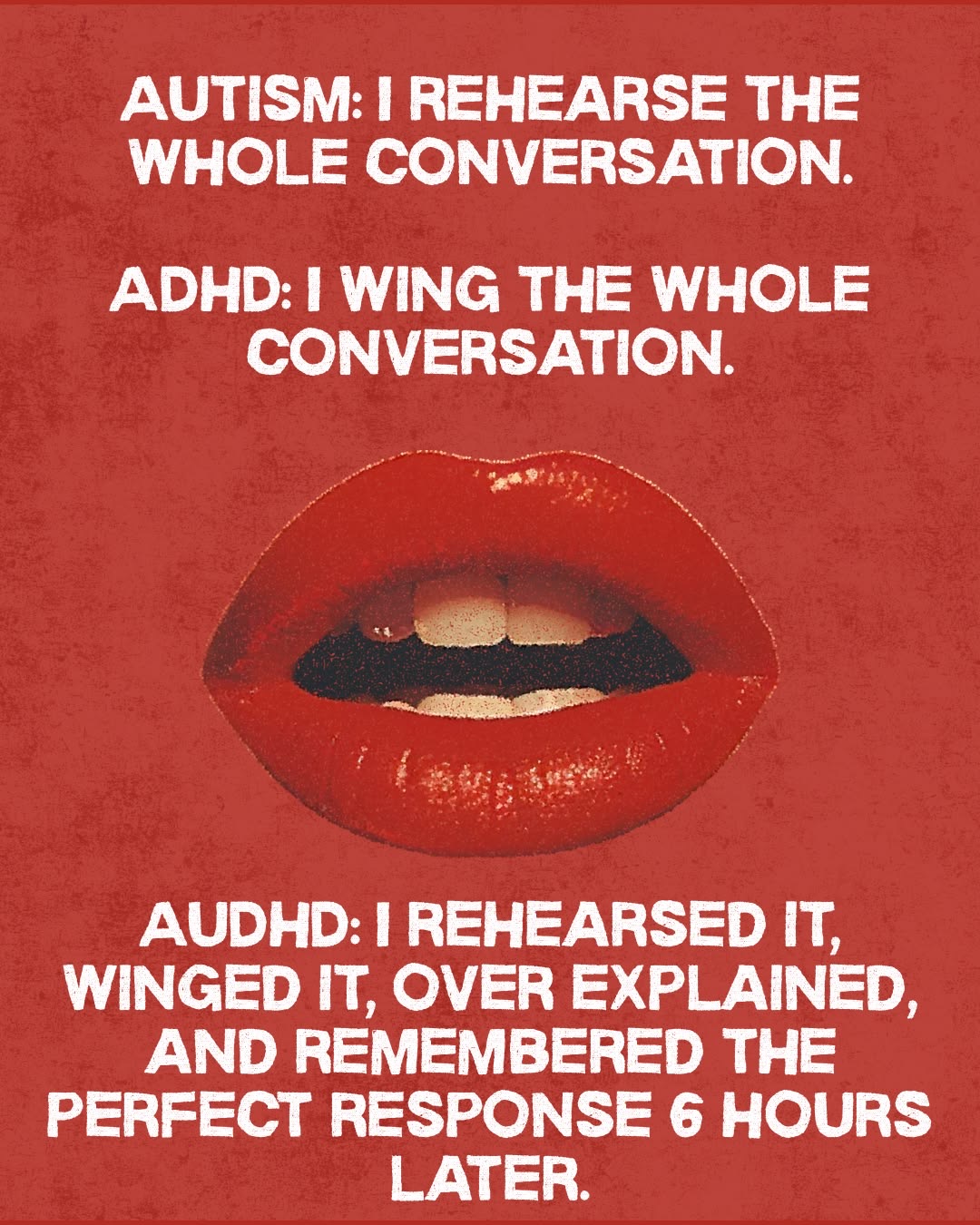
AuDHD is an informal term used to describe someone who has both Autism Spectrum Disorder (ASD) and Attention-Deficit/Hyperactivity Disorder (ADHD).
It is not a separate medical diagnosis. Clinically, ADHD and autism are diagnosed individually, but they frequently coexist.
Having both can create an interesting internal contradiction.
My ADHD brain may say:
“I need novelty. Give me stimulation. Let’s do something new.”
My autistic brain may say:
“I need predictability. Please don’t change the plan.”
ADHD may make me impulsive and spontaneous.
Autism may make unexpected changes exhausting.
ADHD may make maintaining routines difficult.
Autism may make routines deeply regulating.
ADHD may make me seek stimulation.
Autism may make me extremely sensitive to stimulation.
Suddenly, the contradictions weren’t contradictions anymore.
They were information.
Executive Dysfunction
One of the biggest challenges of AuDHD can be executive functioning.
I can know exactly what I need to do and still struggle to initiate it.
This is perhaps one of the hardest things to explain to someone who has never experienced it.
Knowing is not the same as doing.
Something as simple as answering an email, making a phone call, doing laundry or starting paperwork can sometimes feel disproportionately difficult.
Then something genuinely complex that interests me can capture my attention for hours.
This isn’t laziness.
It reflects difficulties regulating attention, motivation and executive functions.
Understanding this allowed me to stop relying exclusively on willpower and start creating systems.
Sensory Overload
Then there is the sensory world.
Sounds.
Bright lights.
Crowds.
Smells.
Certain fabrics.
Too many people speaking simultaneously.
Constant notifications.
Sometimes I don’t realize how overstimulated I am until I suddenly feel exhausted, irritable or desperate to be alone.
Learning about autism helped me understand that regulating my environment isn’t being “difficult.”
Sometimes my nervous system simply needs less input.
Headphones, quieter environments, comfortable clothing, breaks, reduced notifications and time alone can therefore be practical forms of self-regulation.
The Social Paradox
I can enjoy people enormously and still find social interaction exhausting.
I can be expressive, communicative and socially capable while simultaneously analyzing interactions internally.
Did I say too much?
Was that appropriate?
What did that expression mean?
Was that sarcasm?
Should I answer now?
Am I talking too much?
For some autistic adults, particularly those who have spent years adapting themselves socially, masking becomes almost automatic.
You learn the rules.
You observe.
You imitate.
You adjust.
And eventually, you can become so good at appearing comfortable that other people may have no idea how much energy the interaction actually requires.
The cost often appears afterwards: exhaustion, withdrawal or the need for significant recovery time.
When Masking Becomes a Way of Life
For a long time, I thought being socially capable meant that social situations should be easy for me.
If I could make conversation, smile at the right moments, maintain eye contact and appear engaged, then surely I couldn’t be struggling in the way I felt I was.
But masking is not the same as feeling comfortable.
Sometimes it means constantly monitoring myself while trying to appear natural.
I might rehearse what I want to say, analyze someone’s tone, copy the energy of the people around me or suppress the urge to move, leave or ask for clarification.
From the outside, I may look confident.
Inside, I may be working extremely hard to keep up.
The hardest part is that masking can become so automatic that I don’t always notice I’m doing it. I only notice the consequences later, when I am alone and completely depleted.
Emotional Intensity
AuDHD can also affect emotional regulation.
Emotions may feel fast, intense and physically overwhelming.
Criticism or perceived rejection can stay in my mind much longer than I would like. Uncertainty can trigger endless analysis. Sometimes my brain wants an answer now simply because ambiguity itself feels uncomfortable.
I may replay a conversation, search for hidden meanings or assume that a small change in someone’s tone means something much bigger.
This doesn’t mean that every fear is accurate.
It means that the emotional experience can feel very real before I have had time to evaluate it.
Understanding this has taught me something important:
Not every intense emotion requires immediate action.
Sometimes I need to regulate first and interpret later.
That distinction has changed a lot for me.
Hyperfocus, Fixation and the People I Love
My attention can also become intensely focused.
Sometimes it is focused on a project, an idea, a hobby or a subject I want to understand completely.
Sometimes it is focused on a person.
When I connect with someone, I may think about them constantly, notice every detail, replay conversations and become deeply invested in the relationship. The intensity can feel exciting, meaningful and almost impossible to switch off.
This doesn’t mean that my feelings are fake or that I don’t care about the people in my life.
It means that my attention and emotions can become highly concentrated.
I have had to learn that intensity is not always the same as compatibility, and that uncertainty in a relationship can make my brain seek even more information.
Healthy relationships require more than chemistry or fascination. They also require consistency, communication, boundaries and enough space for both people to remain themselves.
Burnout
Eventually, masking, sensory overload, emotional intensity and constant effort can catch up with me.
That is when burnout can appear.
Burnout is more than ordinary tiredness. It can affect my ability to communicate, work, make decisions, tolerate sensory input and manage everyday responsibilities.
I may need more time alone. I may lose access to skills that usually feel automatic. Simple tasks can become overwhelming, and social interaction can feel impossible.
In the past, I interpreted this as failure.
Now I try to see it as information.
My system has been operating beyond its capacity.
Recovery may require sleep, reduced demands, predictable routines, nourishing food, gentle movement, fewer decisions and permission to stop performing.
What Helps Me Without Medication?
Medication can be extremely helpful for ADHD and is an evidence-based treatment. But having AuDHD does not mean that medication is the only intervention available.
Lifestyle and environmental changes matter enormously.
For me, some of the most important principles are regular exercise, sufficient sleep, predictable routines with room for flexibility, reducing sensory overload, externalizing reminders, breaking tasks into very small steps, and allowing myself recovery time after periods of intense stimulation.
I have also learned that I need both structure and novelty.
Too little structure and my ADHD becomes chaotic.
Too much structure and I feel trapped.
So instead of creating a rigid life, I try to create a structured but flexible one.
Exercise Is Regulation
Movement is particularly important for me.
Exercise isn’t only about changing my body.
It regulates my mind.
Walking, strength training, swimming, running or other forms of movement can support mood, sleep and attention while providing an outlet for restlessness and accumulated stress.
Sometimes the intervention my brain needs isn’t another hour of thinking.
It’s movement.
Sleep Is Non-Negotiable
Everything becomes harder when I am sleep deprived.
Attention.
Impulse control.
Emotional regulation.
Sensory tolerance.
Executive functioning.
So protecting sleep has become part of managing my AuDHD rather than an optional wellness habit.
Supplements: Support, Not a Cure
I am also interested in supporting my brain through nutrition and supplements—but with realistic expectations.
There is no supplement proven to “cure” AuDHD.
Omega-3 fatty acids have some evidence for modest benefits in ADHD symptoms. Nutrients such as iron, vitamin D, zinc and magnesium are important for normal functioning, but supplementation is most rational when dietary intake is insufficient or a deficiency is identified.
I don’t see supplements as a replacement for treatment.
I see them as one possible part of a much larger system that includes sleep, exercise, nutrition, emotional regulation, environmental adaptations, psychotherapy when needed, and medication when appropriate.
Before starting supplements or changing treatment, I would encourage readers to consult a qualified healthcare professional, especially because supplements can interact with medications or be inappropriate in certain circumstances.
The Most Important Change
The biggest change after understanding my AuDHD wasn’t learning how to become more productive.
It was learning how to stop fighting myself.
For years, I was trying to force my nervous system to function according to rules that seemed to work naturally for everyone else.
Be consistent.
Stop overthinking.
Don’t be so sensitive.
Just concentrate.
Just relax.
Just do it.
But understanding AuDHD gave me a different question:
What does my nervous system actually need?
Sometimes it needs stimulation.
Sometimes it needs silence.
Sometimes it needs novelty.
Sometimes it desperately needs predictability.
Sometimes it needs people.
Sometimes it needs to be completely alone.
Both can be true.
My Diagnosis Didn’t Change Me. It Explained Me.
Receiving an AuDHD diagnosis didn’t suddenly transform my personality.
It gave me a language for experiences I had spent years trying to explain.
It helped me understand why I could simultaneously crave adventure and predictability, intimacy and solitude, stimulation and silence, freedom and structure.
It helped me understand why I could be deeply interested in someone and still need space, why I could want a routine and resist following it, and why I could appear capable while quietly running out of energy.
Most importantly, it changed the way I speak to myself.
Instead of:
“Why am I like this?”
I can ask:
“What do I need right now?”
Instead of:
“Why can’t I function like everyone else?”
I can ask:
“How can I design my environment so my brain can function at its best?”
Instead of asking why I am too sensitive, too intense or too inconsistent, I can ask what my reactions are trying to tell me.
And instead of spending my life trying to become someone with a different nervous system, I can learn how to take care of the one I actually have.
That, more than anything else, is how understanding my AuDHD changed my life.